
Qi2.2 Market Explosion: 637+ Certified Products as Samsung Galaxy S26 Joins Qi2.2.1 — Elecdov Industry Analysis
The Qi2.2 wireless charging ecosystem has reached a critical inflection point in mid-2026. With 637+ certified products on the market, Samsung Galaxy S26 joining the Qi2.2.1 certified device list, and Apple integrating Qi 2.2 support into iOS 26, the 25W magnetic wireless charging standard is no longer a niche — it is the new baseline for flagship smartphones. This article synthesizes the latest WPC certification data, market trends, and enterprise adoption signals to help businesses and consumers navigate the rapidly expanding Qi2.2 landscape.
Quick Navigation
1. Samsung Galaxy S26 Enters the Qi2.2.1 Certified Device List 2. Global Qi2.2 Certified Product Breakdown: 637+ and Counting 3. Apple iOS 26 Brings Qi 2.2 to iPhone 16 Series 4. The Technology Behind Qi2.2: Why 25W Changes Everything 5. Qi Standard Evolution: From Qi1.2 to Qi2.2 in One Decade 6. Enterprise & B2B: Qi2.2 for Business Procurement1. Samsung Galaxy S26 Enters the Qi2.2.1 Certified Device List
In February 2026, three Samsung Galaxy S26 series models — SM-K772, SM-K777, and SM-K778 — were officially registered in the WPC (Wireless Power Consortium) certification database, signaling Samsung's formal adoption of the Qi2.2.1 standard across its next-generation flagship lineup. According to 9To5Google's analysis, these three model numbers correspond to the Galaxy S26 standard, S26+, and S26 Ultra variants respectively. The registration data confirms that all three devices are Qi2.2.1 certified, marking Samsung's most significant wireless charging specification upgrade in recent memory. The Samsung Galaxy S26 Ultra is expected to feature a 5000mAh+ battery paired with 60W wired fast charging, while wireless charging power is confirmed to have escalated to 25W, fully compliant with Qi2.2 requirements. This is a notable jump from the 15W wireless charging that Samsung maintained across the S24 and S25 series, closing the gap with competitors that had already embraced the Qi2 magnetic alignment standard. What makes the S26 registration particularly significant is the ecosystem signal it sends. Samsung historically powers one of the largest Android user bases globally, and its adoption of Qi2.2.1 creates a ripple effect throughout the accessory supply chain. Certified Qi2.2 chargers that previously worked primarily with Apple iPhones and Google Pixel devices can now claim broad Samsung flagship compatibility — a development that elevates the entire magnetic wireless charging market. Samsung has not adopted MagSafe-style magnetic alignment for the S26 series, opting instead for the non-magnetic Qi2.2 implementation. This means the S26 benefits from the 25W power upgrade and the WPC's enhanced thermal performance requirements while relying on precise coil positioning rather than physical magnetic attachment. For consumers, this distinction matters: the S26 will charge at Qi2.2 speeds on any certified pad, but magnetic mounting solutions remain optimized for Apple iPhone and Qi2 MPP (Magnetic Power Profile) devices. The Samsung Galaxy S26 Ultra's 60W wired + 25W wireless charging combination represents a new performance tier for the Galaxy lineup. Industry analysts note that this dual-charging upgrade reflects the increasing power demands of on-device AI features in flagship smartphones, where efficient energy replenishment has become a key product differentiator. The Qi2.2 standard's improved power delivery protocols enable more efficient energy transfer at the higher 25W tier, reducing the charging time gap between wired and wireless methods.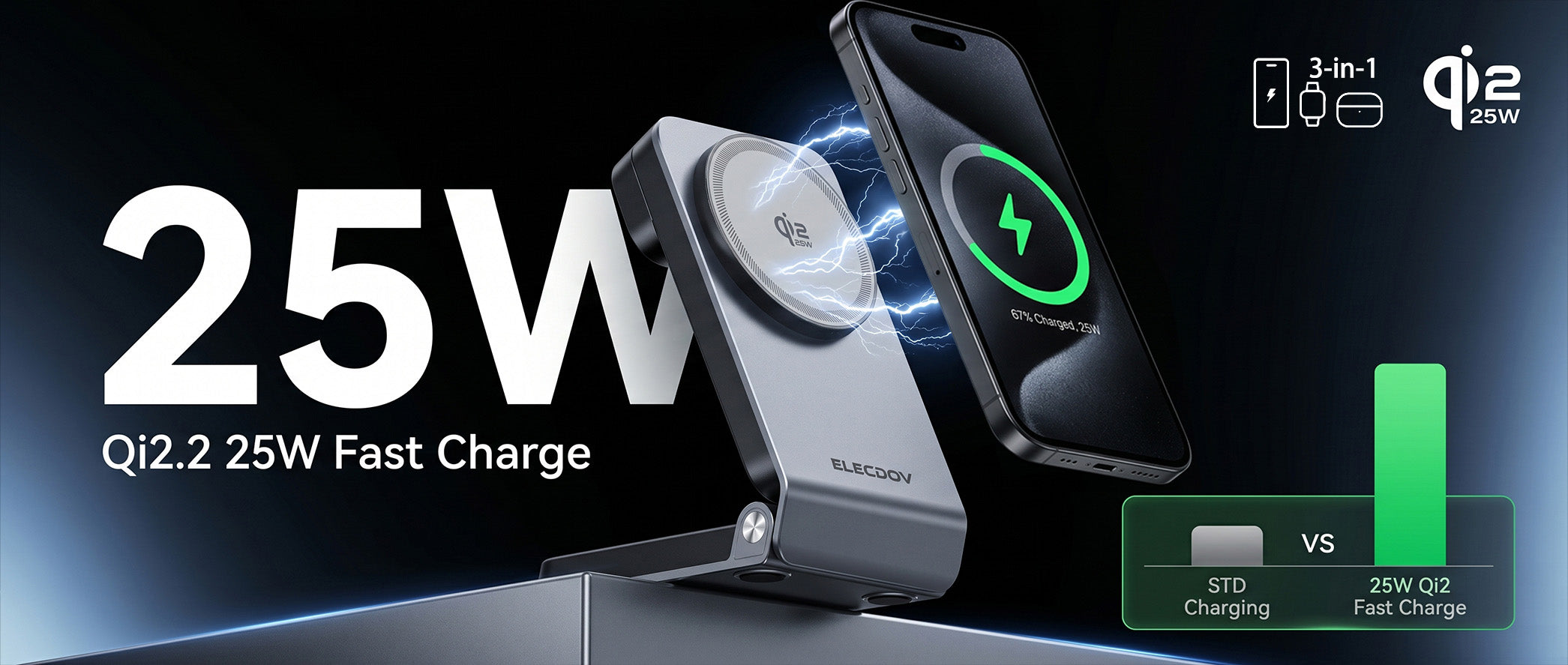
2. Global Qi2.2 Certified Product Breakdown: 637+ and Counting
The Qi2.2 certification ecosystem has experienced explosive growth throughout 2025 and into 2026. According to the latest WPC data analyzed by Elecdov Research, as of February 2026, the total number of products certified under the Qi2.2 protocol surpassed 637 models — a figure that represents a quantum leap from the 521 products recorded in January 2026 and the 500+ milestone reached in late 2025. The momentum shows no signs of slowing, with monthly certification volumes consistently exceeding 100 new product registrations. The product category breakdown reveals where the market's energy is concentrated. Multi-device charging stations (3-in-1 and 2-in-1) dominate the Qi2.2 product landscape, accounting for the largest share of new certifications. This reflects a clear consumer preference for consolidated charging solutions that can simultaneously power a smartphone, smartwatch, and wireless earbuds from a single device. The category diversification is also accelerating: as of December 2025, 64 Qi2.2-certified power banks had entered the market, opening a new product segment for portable magnetic charging on the go. Regional manufacturing data shows that Chinese brands and OEM factories account for the majority of Qi2.2 certifications, driven by the country's robust consumer electronics supply chain and early investment in WPC membership. However, the standard's cross-brand interoperability means that certification volume from any single country does not translate into market share dominance — Qi2.2's core value proposition is precisely that any certified charger works with any certified device, regardless of manufacturer. The certification growth rate deserves special attention from enterprise buyers. When a market scales past the 500-product threshold within 14 months of a standard's commercial launch, it signals supply chain maturity, component availability, and competitive pricing pressure. For IT departments and procurement teams, this means Qi2.2 accessories are transitioning from premium-priced early adopter territory into the mainstream purchasing cycle. Volume pricing for certified 3-in-1 Qi2.2 charging stations is now competitive with legacy Qi1.x alternatives, while offering significantly better charging performance. The WPC's authorized testing laboratory network has scaled to meet demand, with new facilities in China, South Korea, and Europe reducing certification turnaround times compared to the Qi2 launch period. According to industry sources, typical certification timelines for standard Qi2.2 products (non-MPP magnetic profile) now run 6–10 weeks from application to listing, down from 12–16 weeks in early 2025. This acceleration is critical for retailers planning holiday season inventory and for enterprise procurement cycles that operate on annual or semi-annual timelines.
3. Apple iOS 26 Brings Qi 2.2 to iPhone 16 Series
Apple's integration of Qi 2.2 support into iOS 26 represents one of the most impactful software-level endorsements of the new standard in 2026. According to reports from MacRumors, users of the iOS 26 beta have confirmed that the iPhone 16 series now supports the Qi 2.2 25W wireless charging protocol — a direct upgrade from the 15W MagSafe limit that governed iPhone wireless charging since iOS 17. The update is expected to be officially announced alongside the public iOS 26 release later this year. The practical implication for users is straightforward: with a Qi2.2-certified charger, iPhone 16 owners can expect approximately 50% battery charge in approximately 30 minutes from empty, compared to the significantly longer times required under the previous 15W Qi2 MagSafe ceiling. WPC's official data indicates that Qi2.2 at 25W achieves a ~70% power increase over the original Qi2 15W specification — a difference that translates to roughly 25–30 minutes saved on a full charge cycle for most smartphone batteries. This iOS 26 update is strategically significant because it positions Qi2.2 as an Apple-sanctioned upgrade path. Unlike the proprietary MagSafe ecosystem, which required Apple-certified accessories for optimal performance, Qi2.2 is an open WPC standard. This means third-party Qi2.2 chargers from any manufacturer — including Elecdov — can deliver the full 25W charging speed to iPhone 16 devices running iOS 26, on equal footing with Apple's own first-party accessories. The Google Pixel 10 series had already established a precedent for flagship Android devices supporting Qi2.2 25W charging, and the combination of Apple iPhone 16, Google Pixel 10, and Samsung Galaxy S26 all now operating within the same Qi2.2 25W ecosystem creates a compelling unified charging standard. For consumers, this convergence eliminates the anxiety of checking compatibility charts for every new device purchase — a Qi2.2 certified charger purchased today will work optimally with Apple, Samsung, and Google flagship devices launching over the next 2–3 years. Apple's ecosystem integration extends beyond the charging speed itself. Early iOS 26 beta reports indicate that the system intelligently manages Qi2.2 power delivery based on device temperature, battery health metrics, and usage patterns, aligning with the WPC's mandatory thermal performance requirements for Qi2.2 products — specifically, the stipulation that device surface temperatures must remain at or below 40°C during sustained 25W output.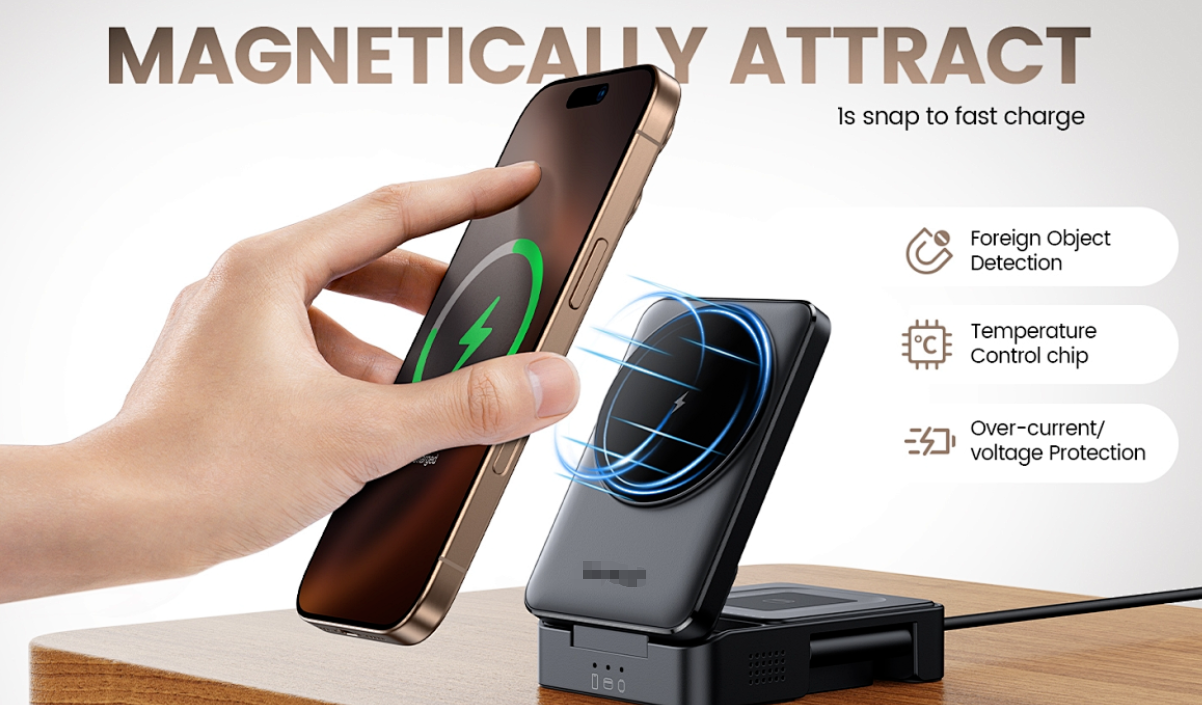
4. The Technology Behind Qi2.2: Why 25W Changes Everything
The jump from 15W (Qi2) to 25W (Qi2.2) is not merely a numerical increment — it represents a fundamental redesign of the wireless power transfer architecture at both the hardware and protocol levels. To understand why 25W matters, it is essential to examine the three pillars of the Qi2.2 specification: power delivery architecture, thermal management requirements, and backward compatibility guarantees. At the power delivery level, Qi2.2 introduces an enhanced Extended Power Profile (EPP) protocol that supports up to 25W through optimized coil design, improved power conversion efficiency, and revised communication handshaking between transmitter (charger) and receiver (device). The power transfer efficiency target for Qi2.2 at 25W has been set at ≥70% by the WPC, a benchmark that significantly exceeds the efficiency achievable under the original Qi1.x 5W standard and approaches wired USB-C Power Delivery efficiency levels. The thermal performance mandate is perhaps the most consequential new requirement in Qi2.2. The WPC has introduced its first-ever mandatory thermal ceiling: during sustained 25W output, the transmitter pad surface must not exceed 40°C. This is a strict requirement that necessitates redesigned heat dissipation architectures in charging equipment — including larger heat sink surfaces, multi-layer thermal pads, active cooling in premium products, and precision-engineered coil assemblies that minimize resistive losses. For consumers, this translates to safer, cooler overnight charging without the thermal concerns that plagued early wireless charging implementations. Foreign Object Detection (FOD) has been enhanced in Qi2.2 with improved sensitivity algorithms that can identify metallic objects as small as a few millimeters in diameter placed between the charging surface and the device. This matters enormously in desktop and bedside scenarios where keys, coins, or paper clips are commonly left on charging pads. The enhanced FOD system in Qi2.2 devices reduces the risk of localized heating events caused by stray metal objects — a safety advancement that addresses one of the longstanding concerns around high-power wireless charging. Backward compatibility is woven into the Qi2.2 specification at a foundational level. Every Qi2.2 certified transmitter must continue to support Qi and Qi2 receivers at their respective power levels. This means a Qi2.2 25W charger will seamlessly negotiate down to 15W for a Qi2 device, 10W for a standard Qi BPP receiver, and 5W for basic Qi devices — all without user intervention. This multi-standard handshake capability ensures that purchasing a Qi2.2 charger is a future-proof investment that does not obsolete existing devices.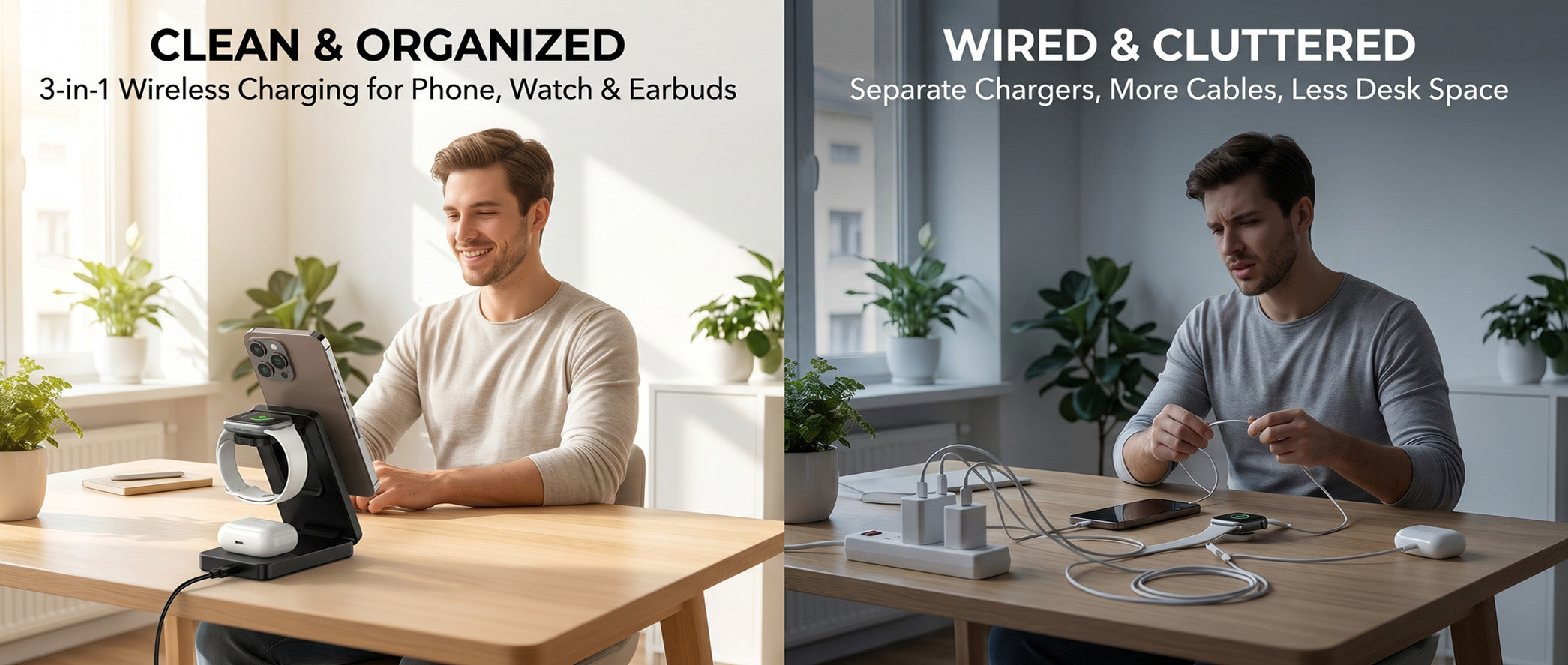
5. Qi Standard Evolution: From Qi1.2 to Qi2.2 in One Decade
The Qi wireless charging standard, developed by the Wireless Power Consortium and first published in 2010, has undergone a remarkable transformation over sixteen years. Understanding this evolution provides essential context for where the technology stands today and where it is headed. The table below captures the major milestones in the standard's development, illustrating how each iteration addressed specific consumer and industry pain points. Qi 1.2 (2014) was the first major revision that introduced Extended Power Profile (EPP) support, enabling power delivery up to 15W and establishing the foundational protocol for high-speed wireless charging. The Qi 1.3 update (2021) focused on security authentication requirements, adding cryptographic verification of charging coils to prevent counterfeit or non-compliant accessories from operating at elevated power levels. Qi 2.0 (2023) introduced the Magnetic Power Profile (MPP), which added physical magnetic alignment to the standard — solving the age-old problem of suboptimal coil positioning that reduced charging efficiency in the vast majority of consumer use cases. Qi 2.2, published in December 2024, represents the most significant power increase in the standard's history: a 67% jump from 15W to 25W maximum output. More importantly, it is the first Qi specification to include mandatory thermal performance requirements. According to the WPC, this thermal mandate was introduced in direct response to safety incidents reported during early 15W+ wireless charging implementations and reflects the organization's commitment to balancing power increases with rigorous safety protocols. The next phase of Qi standard development is already visible on the WPC's public roadmap, with the consortium actively working on Medium-Power and High-Power profiles targeting kitchen appliances,医疗 devices, and electric vehicle charging applications. This expansion of the Qi ecosystem beyond consumer smartphones represents the WPC's strategic ambition to establish Qi as the universal wireless power standard across power classes ranging from sub-1W wearable devices to multi-kW vehicle charging systems.
| Standard Version | Year | Max Power Output | Key Innovation | Primary Devices |
|---|---|---|---|---|
| Qi 1.0 | 2010 | 5W | Initial standard, basic EPP | Feature phones, early smartphones |
| Qi 1.2 | 2014 | 5W / 15W EPP | Extended Power Profile, faster charging | Android flagships, Windows Phones |
| Qi 1.3 | 2021 | Up to 15W | Cryptographic authentication, secure charging | All certified Qi devices |
| Qi 2.0 | 2023 | 15W MPP | Magnetic Power Profile, magnetic alignment | iPhone 12–15, Qi2 Android flagships |
| Qi 2.2 | Dec 2024 | 25W | +67% power, mandatory 40°C thermal ceiling, enhanced FOD | iPhone 16, Pixel 10, Galaxy S26, modern accessories |
| Qi 2.2.1 | 2025 | 25W | Clarified MPP interoperability, updated test specs | All Qi2.2 device categories |
6. Enterprise & B2B: Qi2.2 for Business Procurement
The rapid convergence of Apple, Samsung, and Google around Qi2.2 25W creates a clear signal for enterprise procurement teams: the wireless charging infrastructure deployed today will remain compatible with flagship devices launching through at least 2028–2029. For organizations that issue mobile devices to employees or operate shared charging environments, the case for Qi2.2-first procurement is compelling on both cost and compatibility grounds.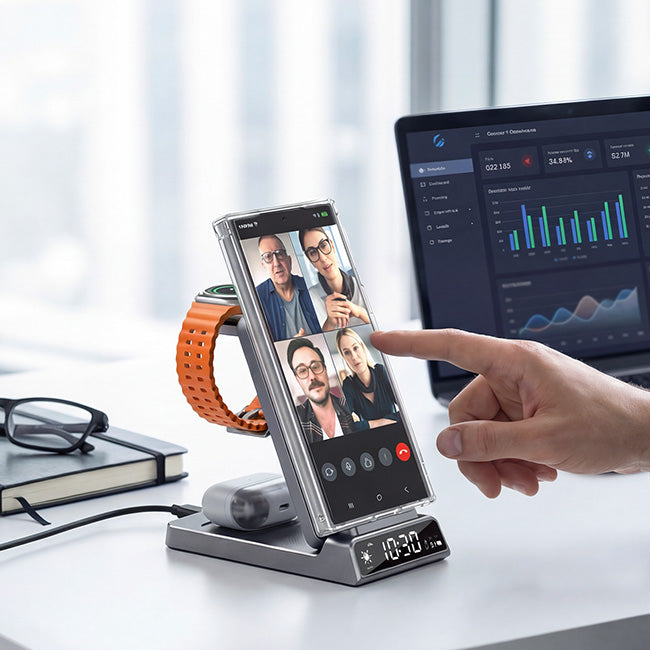
Elecdov Enterprise Procurement: Key Terms
- Minimum Order Quantity: 10 units with tiered volume discounts up to 500+ units
- Certifications Included: WPC Qi2.2 compliance certificates, test reports, WPC registration IDs — all provided with each order
- Dedicated Account Management: Single-point contact for quotations, lead times, and post-purchase support
- Custom Branding: Logo etching or pad printing available at 50-unit MOQ; full Pantone color matching at 200+ units
- Firmware Customization: Custom LED behavior, power management policies, and device authentication protocols at 500+ units
- Flexible Delivery: Split shipments, phased delivery, and blind shipping options for multinational organizations
- Extended Warranty: 3-year and 5-year advanced replacement plans available on all enterprise orders
| Product | Charging Output | Key Features | Best For | Enterprise MOQ |
|---|---|---|---|---|
| CE20S | 25W + 15W + 5W (3-zone) | Aluminum alloy base, independent thermal circuits, LED indicators, Qi2.2 | Executive desks, home offices, multi-device households | 10+ units |
| CE19S-CF | 25W + 15W + 5W (3-zone) | Carbon fiber housing, military-grade durability, superior heat dissipation | Tech professionals, heavy users, premium aesthetics | 10+ units |
| W103S | 25W single-device | Ultra-compact, USB-C powered, PD compatible, Qi2.2 certified | Frequent travelers, hotel rooms, backup charging | 10+ units |
| W98S | 25W + 15W + 5W (3-zone) | Deep Galaxy OS integration, lock screen notifications, independent thermal | Samsung households, IT departments, open offices | 10+ units |
Frequently Asked Questions
Q1: Does the Samsung Galaxy S26 require a magnetic charger?
No. The Galaxy S26 is Qi2.2.1 certified but does not use the Magnetic Power Profile (MPP). It charges at 25W on any Qi2.2 certified non-magnetic pad. Magnetic mounting solutions are primarily designed for Apple iPhone and Qi2 MPP-compatible Android devices.
Q2: How many Qi2.2 certified products are currently available?
As of mid-2026, the WPC database lists over 637 Qi2.2 certified products globally, spanning multi-device charging stations, single-device chargers, and portable power banks. Monthly certification volumes average over 100 new products.
Q3: Can a Qi2.2 charger charge older Qi devices?
Yes. Every Qi2.2 certified transmitter is required to maintain backward compatibility with Qi and Qi2 receivers. A Qi2.2 25W charger will automatically negotiate the appropriate power level (5W, 10W, or 15W) for any connected Qi-certified device.
Q4: What makes Qi2.2 safer than previous wireless charging standards?
Qi2.2 is the first Qi specification to include a mandatory thermal performance requirement: the transmitter surface must not exceed 40°C during sustained 25W output. It also features enhanced Foreign Object Detection (FOD) with improved sensitivity to identify small metallic objects placed on the charging surface.
Q5: How can enterprise buyers purchase Elecdov Qi2.2 products in bulk?
Elecdov's enterprise procurement program starts at 10-unit minimum orders with tiered volume discounts. Enterprise buyers receive WPC Qi2.2 compliance documentation, a dedicated account manager, and flexible delivery options including split shipments and blind shipping. Contact Elecdov via the enterprise quote portal to begin the process.
Recommended Elecdov Products
Explore Elecdov's full range of Qi2.2 certified wireless charging solutions for home, office, and enterprise.
Browse All Elecdov Products


