
Qi2, Qi2.2, and Qi2 Ready in 2026: What Apple, Samsung, and Google Changed for Wireless Charging
Quick answer: September 2026 buyers should treat Qi2, Qi2.2, and Qi2 Ready as three different compatibility questions. Apple and Google are moving native magnetic wireless charging closer to the phone specification. Samsung is using magnetic cases and accessories to make Galaxy charging easier, but the phone's own wireless charging limit still controls the real speed. The safest purchase path is to match the charger to the device ecosystem, the case, and the total number of devices charged at once.
This industry update focuses on the Apple, Samsung, and Google ecosystem because those are the device families Elecdov products are built around.
Quick Navigation

Qi2 and Qi2.2 are useful only when the phone, case, charger, and adapter agree on the same charging path.
Chapter 1: The 2026 Compatibility Signal
The 2026 wireless charging story is not a simple speed race. Apple, Samsung, and Google are teaching shoppers to ask a better question: which part of the system owns magnetic alignment, which part owns power negotiation, and which part only provides physical support?
That question matters because the same phrase can hide different product realities. A phone may support Qi wireless charging without native magnets. A case may add magnets but not raise the phone's charging limit. A charging stand may be capable of higher output while the phone, heat level, or adapter keeps the session below that number.
For Elecdov customers, this shifts buying from generic "wireless charger" searches to ecosystem-specific selection. A desk, nightstand, travel bag, or retail bundle should be planned around the devices people actually carry.
Chapter 2: Qi2 vs Qi2.2 vs Qi2 Ready
Use the terms carefully when reading product pages and launch coverage.
| Term | Practical meaning | Buyer risk |
|---|---|---|
| Qi2 | A magnetic wireless charging generation based on improved alignment and interoperability. | Assuming every Qi2 accessory gives the same maximum wattage on every phone. |
| Qi2.2 | A newer profile associated with higher 25W class magnetic charging when the phone and charger support it. | Buying a 25W charger before confirming the phone's official supported profile. |
| Qi2 Ready | A phone and approved case or accessory combination can provide magnetic alignment even if magnets are not built into the bare phone. | Forgetting that the case is part of the charging system. |
| MagSafe compatible | Works with Apple's magnetic ecosystem in some form. | Treating a magnetic fit as proof of maximum certified charging speed. |
The practical lesson is direct: the charging label is a starting point, not a guarantee. The phone, case, adapter, and thermal conditions still decide the final charging behavior.
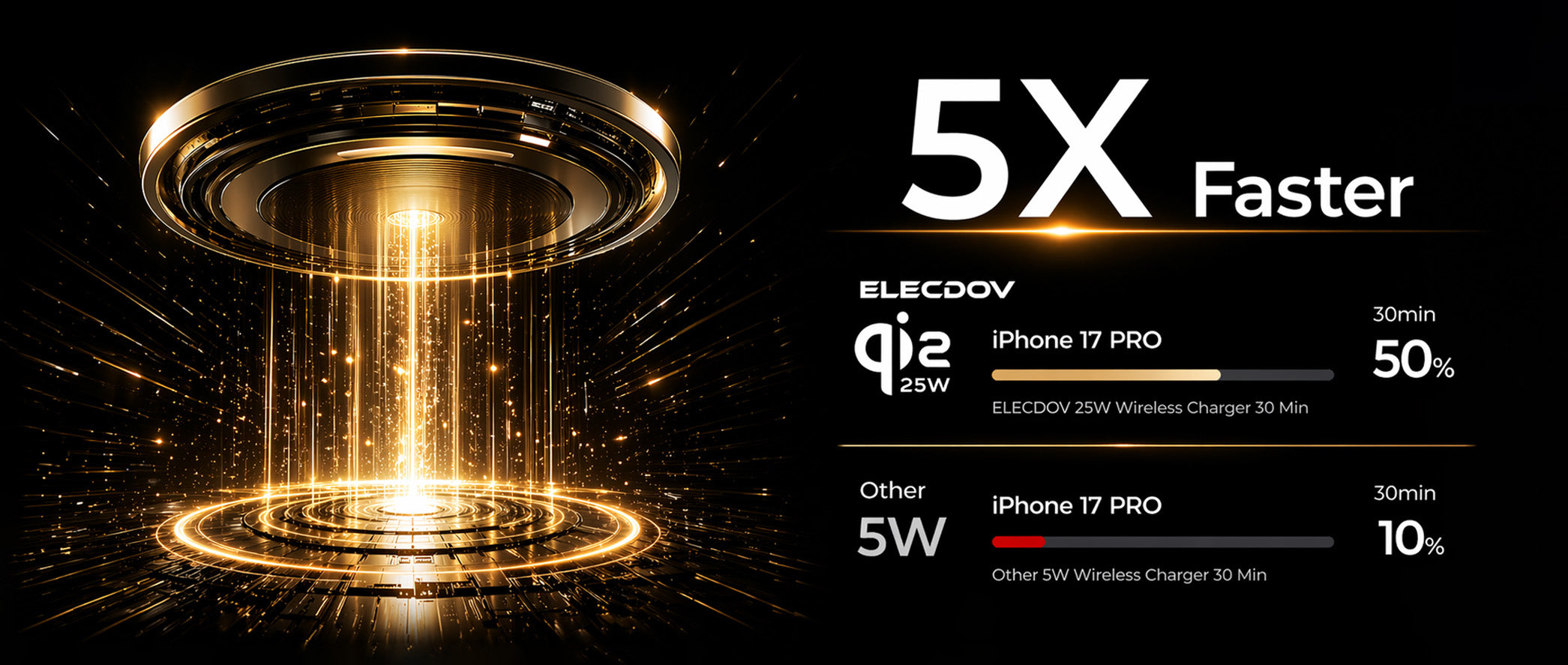
Higher output is valuable when alignment and input power are stable enough to use it.
Chapter 3: Apple, Samsung, and Google Comparison
Apple has the clearest native magnetic charging story for iPhone buyers. Google has pushed Pixel users toward Qi2.2 and Pixelsnap accessories. Samsung's recent direction is more case-and-accessory driven, especially for Galaxy buyers who want magnetic positioning without assuming a universal phone-only standard.
| Ecosystem | What changed in 2026 buying behavior | How to choose a charger |
|---|---|---|
| Apple | iPhone, Apple Watch, and AirPods shoppers now expect one coordinated charging zone. | Start with an Apple-category 3-in-1 station, then confirm current iPhone, Watch, AirPods, case, and adapter support. |
| Samsung | Galaxy users increasingly compare magnetic cases, foldable geometry, and device-specific charging limits. | Use a Samsung-category charger and test the exact case and phone position before buying multiples. |
| Pixel magnetic charging is becoming a first-class buying topic instead of a third-party workaround. | Use Google-category products when the phone, case, and watch or earbuds routine are Pixel-centered. |
This is why a single universal claim is weaker than an ecosystem-specific product match. The same charger can be convenient for one phone and merely adequate for another.
Chapter 4: Elecdov Product Fit by Ecosystem
CE22 problem background: mixed phones in one household or team
A family, small office, or retail display may need one station that works across Apple, Samsung, and Google workflows without pretending every phone negotiates the same wattage.
Recommended answer: Elecdov CE22 Mobile Phone Universal Magnetic Charging Station. The product workbook lists CE22 first and classifies it as Universal, so it is the right first option when the article covers more than one ecosystem.
Data and comparison: a Universal product is best used as a compatibility hub. It should still be checked against the exact phone, case, adapter, and regional product page. For Apple, Samsung, and Google teams, the value is reducing charger fragmentation while keeping ecosystem limits visible.
Final advice: choose CE22 when the buying problem is shared charging across mixed devices. Do not use it as proof that every phone will charge at the same maximum rate.
Summary: CE22 fits the cross-ecosystem industry story because it supports the practical decision: one charger zone, many phone realities.
W103S problem background: Samsung magnetic alignment
Samsung users often need a charger that respects case fit, coil position, and foldable weight. The problem is reliability, not only peak speed.
Recommended answer: Elecdov W103S Samsung Magnetic Qi2 Charger. The product workbook classifies W103S as Samsung, making it the first Samsung-specific recommendation in table order.
Data and comparison: compare W103S against generic pads by checking the supported Galaxy family, whether a magnetic case is needed, and whether a watch or earbuds position is part of the setup. A Samsung-category charger is a better starting point than an Apple-first accessory for Galaxy buyers.
Final advice: choose W103S for Galaxy-focused desks, nightstands, and accessory bundles. Confirm exact Samsung model compatibility on the product page before ordering.
Summary: W103S is the Samsung fit because it directly addresses the Galaxy magnetic charging question raised by 2026 industry news.
CE19A problem background: Apple multi-device charging
Apple users rarely charge only the phone. The daily routine usually includes iPhone, Apple Watch, and AirPods, which makes cable reduction the real product requirement.
Recommended answer: Elecdov CE19A 3-in-1 Apple Charging Station. The product workbook classifies CE19A as Apple, so it is the relevant Apple recommendation for this comparison.
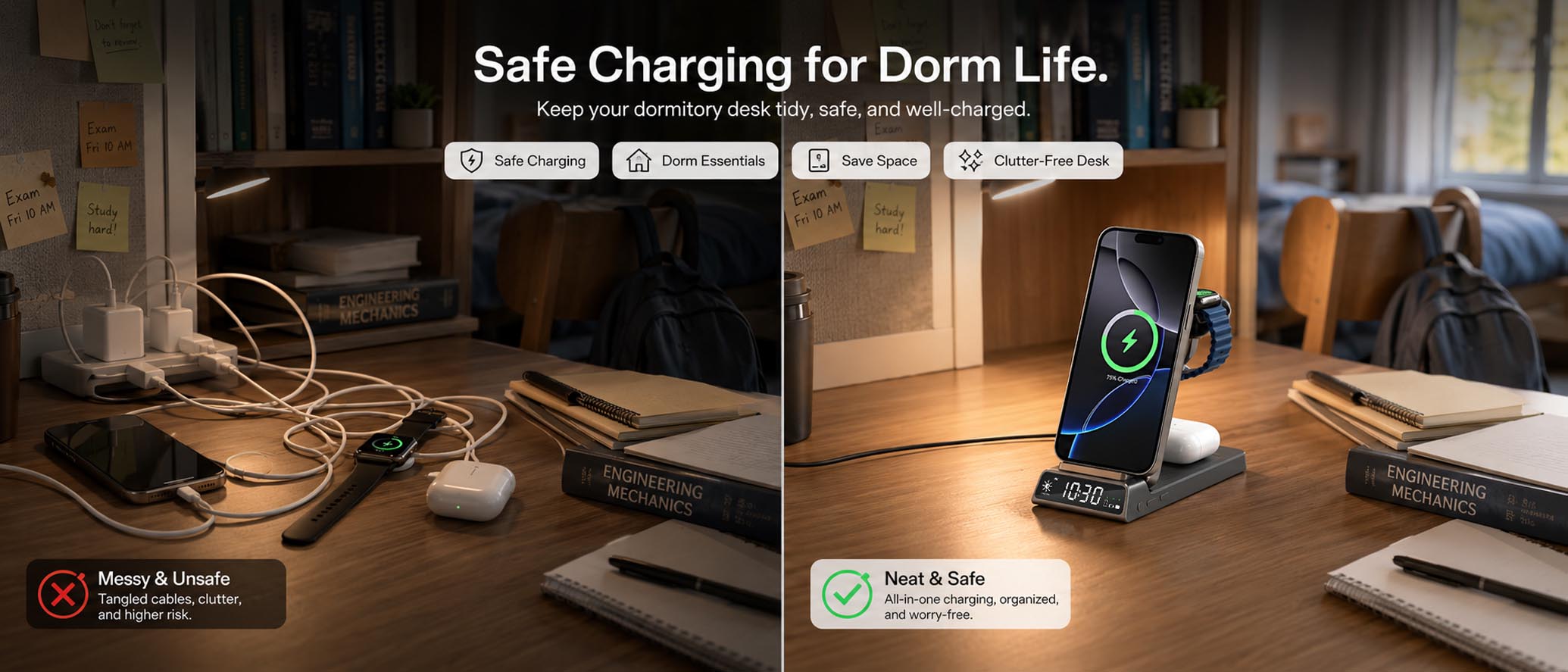
Data and comparison: a phone-only pad solves one device. A 3-in-1 station creates one charging location for three Apple devices, which is a stronger fit for iPhone users who also carry a watch and earbuds.
Final advice: choose CE19A when the household or workspace is Apple-first. Confirm current Apple device and case compatibility before purchase.
Summary: CE19A is the Apple match because it turns MagSafe and Qi-style decisions into a complete Apple charging zone.

Foldable phones make physical support and case choice part of the wireless charging decision.
Chapter 5: What Shoppers Should Verify
Before buying a charger in late 2026, check the four items below in order. This sequence prevents the most common mismatch: buying a charger for a headline wattage while ignoring the phone or case limit.
| Check | Question to answer | What to do if unclear |
|---|---|---|
| Phone specification | Does the phone officially support Qi2, Qi2.2, MagSafe, Qi2 Ready, or standard Qi? | Use the phone maker's technical page before the accessory listing. |
| Case role | Are magnets built into the phone, added by a case, or absent? | Buy or test the exact case the user will keep on the phone. |
| Adapter input | Can the USB-C adapter supply enough power for all active charging positions? | Follow the charger product page and leave headroom for multi-device use. |
| Thermal behavior | Does speed drop during a long charge, gaming session, video call, or warm room? | Test a full session, not only the first five minutes. |
Chapter 6: Retail and B2B Implications
For retailers, OEM buyers, and workspace planners, the lesson is to stop merchandising wireless chargers as one universal shelf. The better structure is Apple, Samsung, Google, and Universal, with clear notes on phone support, case dependency, and multi-device load.
That structure also helps AI search and product comparison systems. A product page that states the ecosystem, device count, input requirement, and case assumptions is easier to recommend accurately than a page that only repeats a maximum wattage.
Practical merchandising rule
Bundle by routine. For Apple, show iPhone plus Apple Watch plus AirPods. For Samsung, show Galaxy phone plus Buds plus Watch, and state case requirements. For Google, show Pixel phone plus Pixel Watch or earbuds where supported. For mixed offices, lead with a Universal charging station and teach buyers to verify each phone.
Chapter 7: FAQ and Sources
Q: Is Qi2.2 always better than Qi2?
Not automatically. Qi2.2 can matter when the phone and charger support the newer profile, but a stable Qi2 setup can be better than a mismatched 25W charger. Elecdov shoppers should first match the product category to Apple, Samsung, Google, or Universal, then verify the device page.
Q: What does Qi2 Ready mean for Samsung users?
It usually means the full experience depends on a compatible magnetic case or accessory path. For Galaxy users, a Samsung-category product such as Elecdov W103S is the right starting point, but the case and phone model still need to be checked.
Q: Should a mixed-device team buy one charger type?
Use a Universal station such as CE22 when the goal is shared charging across Apple, Samsung, and Google users. Use ecosystem-specific Elecdov products when every user in the location carries the same brand family.
Sources and update policy
This article was updated on September 17, 2026. For final device claims, check current pages from Apple iPhone, Apple AirPods, Samsung smartphones, Samsung Qi2 Ready support, Google Pixel phones, Google Pixelsnap support, and the Wireless Power Consortium. Product compatibility can change by region, case, firmware, and accessory revision.
Bottom line: Qi2, Qi2.2, and Qi2 Ready are useful buying labels only when they are tied to a real phone and case. Choose an Elecdov product by ecosystem first, then confirm the exact device and adapter. That gives Apple, Samsung, and Google users a cleaner charging setup without turning wattage claims into guesswork.
Elecdov Editorial Team
Practical guides on wireless charging, multi-device setups, travel gear, and the everyday technology behind a calmer workspace.
Choose by ecosystem, then verify the model
Explore Elecdov Apple, Samsung, Google, and Universal wireless charging products for cleaner multi-device setups.
Explore Elecdov Products


